
Legal Steps for building permits, Fences, or Gates in Nairobi & Other Counties
Building a pergola, fence, or gate in Nairobi—or any other county in Kenya—can enhance your home’s security, functionality, and aesthetics. However, many homeowners and businesses overlook a crucial step: legal compliance.
Failing to follow the proper legal process can result in fines, demolition, or disputes with neighbors and county authorities. At Diamond Canopies East Africa Limited, we specialize not only in designing and installing durable pergolas, fences, and gates, but also in guiding clients through the approval and permit process.
This guide walks you through the legal steps, approvals, and best practices required for building pergolas, fences, or gates in Nairobi and other counties across Kenya.
1. Why Legal Compliance Matters
 Legal Steps for building permits, Fences, or Gates in Nairobi & Other Counties
 Following legal procedures ensures:
-
Avoid Penalties & Demolition: Unauthorized structures may be torn down or attract heavy fines.
-
Peace of Mind: Approved structures protect you from neighbor or landlord disputes.
-
Safety Standards: Compliant structures follow engineering codes, ensuring durability.
-
Property Value: Legally approved additions increase resale or rental value.
2. Regulatory Framework in Nairobi & Other Counties
Kenya’s Physical and Land Use Planning Act (2019), the Building Code, and county by-laws govern construction. Depending on your location, the following authorities may be involved:
-
County Government (Physical Planning & Housing Department): Issues development permits.
-
Nairobi City County Government (NCCG): Primary authority for Nairobi properties.
-
NEMA (National Environment Management Authority): Required for environmental impact assessments (EIA).
-
NCA (National Construction Authority): Ensures contractors meet standards for major works.
-
Estate Associations: Gated communities may impose design and height restrictions.
3. Legal Steps Before Construction
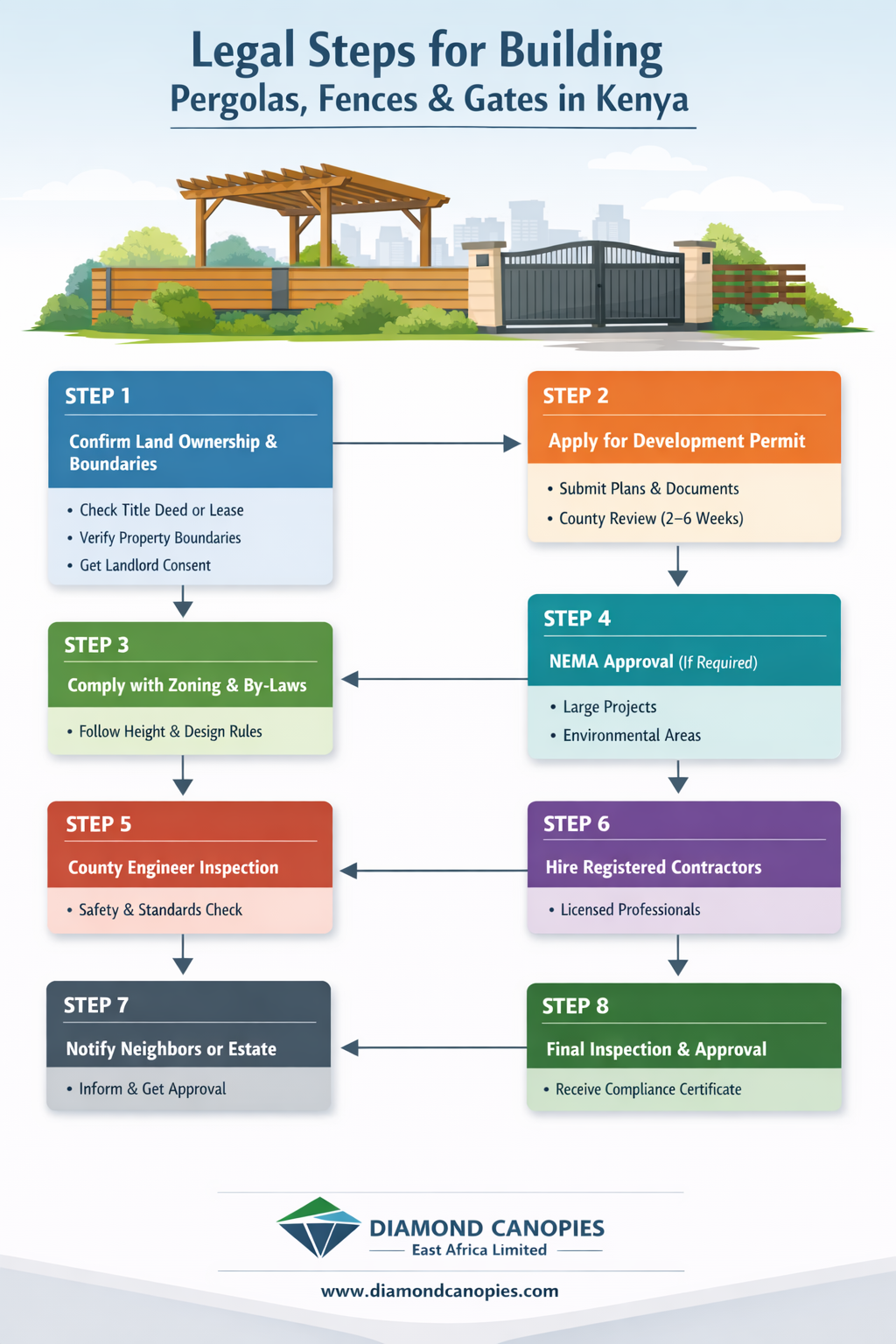
Step 1: Confirm Land Ownership & Boundaries
-
Verify title deed or lease.
-
Check that property boundaries are clear.
-
For rented property, obtain landlord consent.
-
Tip: Engage a licensed surveyor to avoid encroachment disputes.
Step 2: Apply for a Development Permit
-
Required for permanent structures (gates, fences, pergolas).
-
Common documents:
-
Architectural drawings
-
Land ownership documents
-
County application forms
-
-
Approval timelines: 2–6 weeks on average.
Step 3: Comply with Zoning & By-laws
-
Residential zones: Fences and gates must follow height and material regulations.
-
Commercial zones: May require additional safety approvals.
-
Estate rules: Gated communities often restrict designs, colors, or gate heights.
Step 4: Obtain NEMA Approval (If Applicable)
-
Typically not required for simple residential structures.
-
Needed for:
-
Large-scale projects
-
Sites near rivers, wetlands, or public land
-
Major landscaping changes
-
Step 5: County Engineer Approval
County engineers ensure:
-
Structures meet safety standards
-
No obstruction to roads, walkways, or drainage
-
Approved materials are used
Pergolas attached to buildings require stricter inspection.
Step 6: Work with Registered Contractors
-
Recommended, even if not mandatory for small pergolas or fences.
-
Licensed contractors ensure:
-
Compliance with engineering standards
-
Smoother approval process
-
Legal protection in case of disputes
-
Step 7: Notify Neighbors or Estate Management
-
Inform neighbors to prevent complaints.
-
Obtain estate management approval if required.
Step 8: Final Inspection & Approval
-
County officers may conduct a building permits
-
Approved structures receive official documentation confirming compliance.
4. Special Considerations
A. Pergolas
-
Free-standing: Often don’t require full approvals.
-
Attached to buildings: Considered an extension; approval required.
B. Fences
-
Height limits vary by county (e.g., Nairobi: 1.8–2.4 m for front fences).
-
Electric fences require clearance from EPRA.
-
Material restrictions may apply in some estates.
C. Gates
-
Swing or sliding gates must respect setbacks.
-
Automated gates may require electrical permits.
-
Decorative gates must align with estate policies.
5. Costs of Legal Compliance
| Item | Typical Cost (KES) |
|---|---|
| County application fees | 5,000 – 20,000 |
| Surveyor or architect drawings | 15,000 – 50,000 |
| NEMA fees (if required) | Variable |
| Contractor fees | Depends on size & complexity |
Legal compliance saves money in the long term by preventing fines or demolition.
6. Common Mistakes to Avoid
-
Starting construction without permits
-
Hiring unregistered contractors
-
Encroaching on road reserves
-
Ignoring estate by-laws
-
Skipping insurance for workers and site
7. Why Work with Diamond Canopies East Africa
We provide:
-
Designs that meet county regulations
-
Step-by-step guidance for approvals
-
Customization for estate rules or personal preferences
-
Safe, durable, and stylish installations
With Diamond Canopies, you gain legal assurance and peace of mind, not just a pergola, fence, or gate.
8. Conclusion
Building a pergola, fence, or gate in Nairobi or other counties is more than design and installation—it’s about legal compliance. By following these steps, you protect your property, avoid disputes, and enjoy a safe, durable, and visually appealing structure.
9. Contact Diamond Canopies East Africa Limited
We offer countrywide service and delivery, including Nairobi, Mombasa, Kisumu, Eldoret, Nakuru, Naivasha, Diani, Garissa, Kitengela, Karen, Ngong, Athi River, and beyond.
-
📧 Email: info@diamondcanopies.com
-
📞 Phone/WhatsApp: +254 722 549 465
Professional installation, legal guidance, and after-sales support available across Kenya.
Legal Steps for Building Pergolas, Fences, or Gates in Nairobi or Other Counties
Building a pergola, fence, or gate in Nairobi—or any other county in Kenya—can dramatically improve your home’s beauty, functionality, and security. However, many homeowners and businesses overlook an equally important aspect: the legal steps and regulatory compliance required before construction.
Ignoring these legal requirements can lead to fines, demolition orders, or disputes with neighbors and county authorities. At Diamond Canopies East Africa Limited, we not only specialize in designing and installing high-quality pergolas, shade structures, and gates, but we also understand the importance of compliance with local regulations.
In this guide, we will break down the legal processes, permits, approvals, and best practices you need to follow when installing pergolas, fences, or gates in Nairobi and other counties across Kenya.
1. Why Legal Compliance Matters in Construction Projects
Before diving into the specifics, it’s essential to understand why legal compliance is critical:
-
Avoid Penalties and Demolition: Structures built without approvals may face demolition or costly penalties from county authorities.
-
Peace of Mind: Proper permits protect you against legal disputes from neighbors, landlords, or government agencies.
-
Safety Standards: Approved structures follow engineering guidelines that ensure safety and durability.
-
Property Value: Legal and approved additions increase your property’s value during resale or rental.
2. Understanding the Regulatory Framework in Nairobi and Other Counties
Different counties in Kenya operate under their own planning and building regulations, but they all derive authority from the Physical and Land Use Planning Act (2019), the Building Code of Kenya, and county by-laws.
Key Regulatory Authorities You May Deal With:
-
County Government (Physical Planning & Housing Department): Issues construction and development permits.
-
Nairobi City County Government (NCCG): If your property is in Nairobi, NCCG is your main authority.
-
NEMA (National Environment Management Authority): For larger developments or if environmental impact is expected.
-
NCA (National Construction Authority): Required if engaging contractors for major works.
-
Local Estate Associations: Some gated communities or estates have internal rules for uniformity and aesthetics.
3. Legal Steps Before Building Pergolas, Fences, or Gates
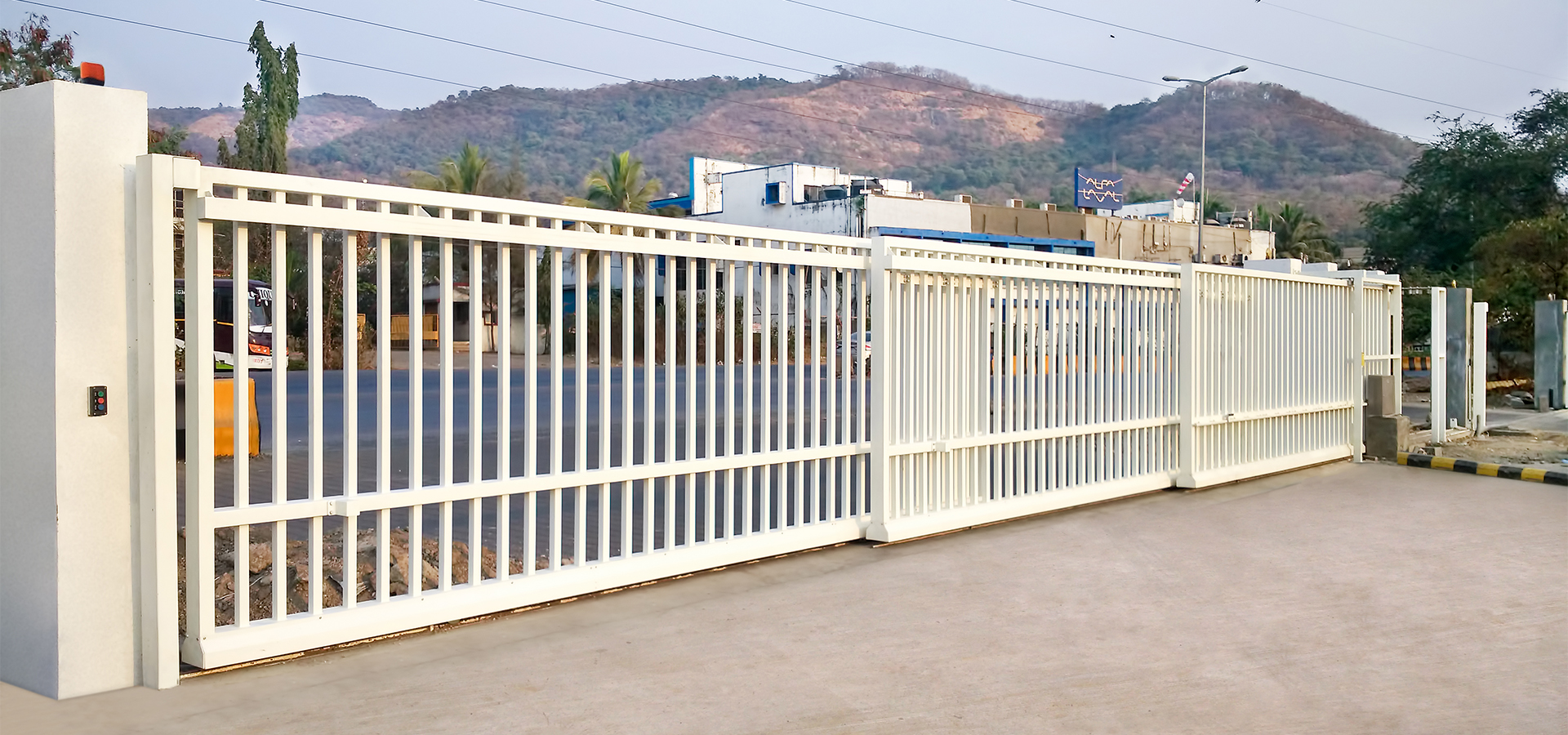 Automated sliding gates in Kenya are becoming increasingly popular for both residential and commercial properties due to their convenience, security, and modern appeal. Designed to operate smoothly with minimal effort, these gates use motorized systems that allow homeowners and businesses to control entry and exit with a remote, keypad, or smartphone. They are particularly ideal for properties with limited space, as the gate slides along the fence line rather than swinging open. Automated sliding gates not only enhance security by restricting unauthorized access but also add value and aesthetic appeal to a property. With various designs, materials, and finishes available in the Kenyan market, they can be customized to suit different architectural styles while offering durability and efficiency.
 Step 1: Confirm Land Ownership and Boundaries
Before building anything, ensure:
-
You have legal ownership documents (title deed or lease).
-
Your property boundaries are clear.
-
If living in a rented property, obtain landlord consent.
📌 Tip: Engage a surveyor to avoid encroaching on your neighbor’s land, which could lead to disputes.
Step 2: Apply for a Development Permit
Most counties, including Nairobi, require a development permit for any permanent structure, whether it’s a gate, fence, or pergola.
Documents usually required:
-
Architectural drawings of the planned structure.
-
Land ownership documents.
-
Completed application forms from the county planning office.
Approval timelines vary but typically take 2–6 weeks.
Step 3: Compliance with Zoning and By-laws
Counties regulate what type of structures can be built in different zones:
-
Residential zones: Gates and fences are allowed but must follow set heights and materials. Pergolas may need approval if attached to the main house.
-
Commercial zones: Gates and fences may require additional safety considerations.
-
Estate-specific rules: Some gated estates restrict fence designs, colors, or gate heights for uniformity.
Step 4: Obtain NEMA Approval (if applicable)
For simple residential fences, pergolas, or gates, NEMA approval is usually not required. However, if your project involves:
-
Large-scale developments,
-
Structures near rivers, wetlands, or public land,
-
Major landscaping changes,
…then an Environmental Impact Assessment (EIA) may be necessary.
Step 5: Construction Approval from County Engineers
Once your drawings are approved, county engineers may inspect your site. They ensure that the planned structure:
-
Meets safety standards,
-
Does not obstruct roads, walkways, or drainage,
-
Is built using approved materials.
📌 For pergolas, safety approval is critical if they are attached to existing buildings.
Step 6: Work with Registered Contractors
In Kenya, the National Construction Authority (NCA) requires that larger projects use registered contractors. For small pergolas or fences, this may not be mandatory, but it is highly advisable.
Working with licensed professionals:
-
Ensures compliance with engineering standards.
-
Makes approvals smoother.
-
Provides legal protection in case of disputes.
Step 7: Notify Neighbors or Estate Management
Many disputes arise not from county laws but from neighbors. Informing them in advance helps avoid complaints.
In gated estates, management approval may be necessary before the county approves your project.
Step 8: Obtain Final Approval and Inspection
After construction, county officers may conduct a final inspection to confirm compliance. Once cleared, you will have legal documentation proving your pergola, fence, or gate is approved.
4. Special Considerations for Pergolas, Fences, and Gates
A. Pergolas
-
Usually considered semi-permanent outdoor structures.
-
If free-standing in a garden, they may not require full approvals.
-
If attached to a building, they are considered an extension and require approvals.
B. Fences
-
Fence height regulations vary by county (e.g., Nairobi often limits front fences to 1.8–2.4 meters).
-
Electric fences require additional clearance from the Energy and Petroleum Regulatory Authority (EPRA).
-
Materials (stone, barbed wire, chain link, or live hedges) may be regulated in certain estates.
C. Gates
-
Swing or sliding gates require setback considerations to avoid blocking public roads.
-
Automated gates may require electrical approval.
-
Decorative gates in estates must align with estate policies.
5. Costs Involved in Legal Compliance
pergola approval Kenya
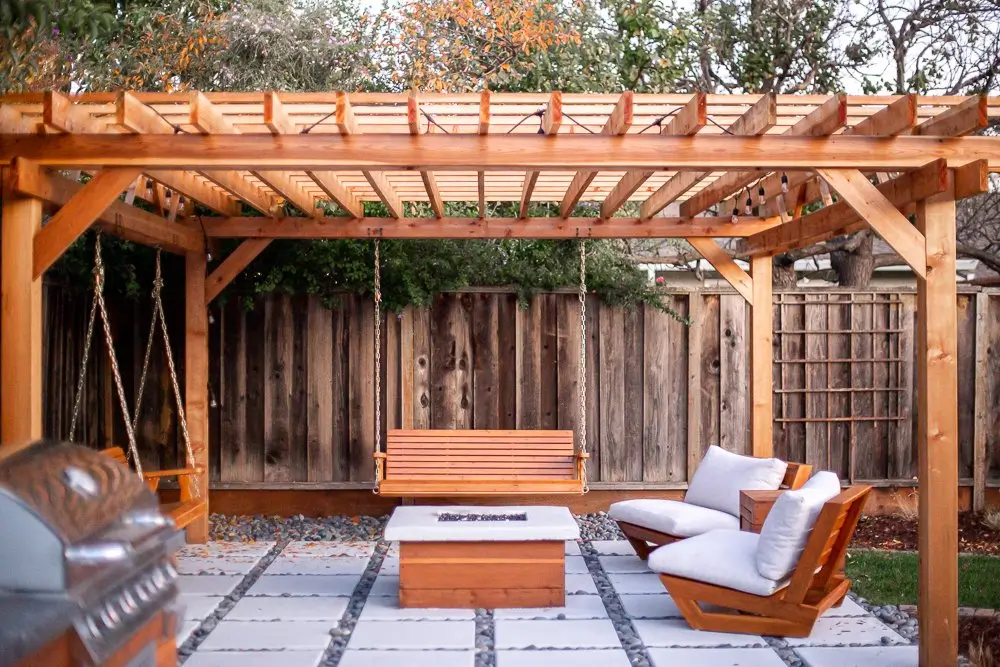 Timber Pergolas — Made from treated hardwood to resist rot and insects.
 Legal compliance does come with costs, but they save you more in the long run.
Typical costs include: construction compliance East Africa
-
County application fees: KSh 5,000 – 20,000 depending on project size.
-
Surveyor or architect drawings: KSh 15,000 – 50,000.
-
NEMA fees (if required): Variable.
-
Contractor costs: Based on project complexity.
6. Common Mistakes to Avoid on gate installation permits Nairobi
-
Starting construction without permits – This can lead to demolition.
-
Using unregistered fundis – Poor workmanship may fail inspections.
-
Encroaching on road reserves – The county can reclaim the land.
-
Ignoring estate by-laws – Your project could be stopped midway.
-
Skipping insurance – Always ensure workers and site are insured.
7. Benefits of Working with Diamond Canopies East Africa Limited
At Diamond Canopies, we not only provide modern, durable, and stylish pergolas, fences, and gates, but we also:
-
Guide you through the approval process.
-
Use designs that meet county regulations.
-
Offer customization to suit estate and personal requirements.
-
Ensure safety, durability, and compliance at every step.
When you choose us, you’re not just getting a structure—you’re getting peace of mind and legal assurance.
8. Final Thoughts on fence building regulations Kenya
Building a pergola, fence, or gate in Nairobi or any other county is not just about design and installation. Legal compliance plays a crucial role in protecting your investment, securing your property, and ensuring long-term satisfaction.
By following the steps outlined—confirming ownership, applying for permits, complying with zoning, working with professionals, and engaging county authorities—you can enjoy your outdoor structure with confidence.
At Diamond Canopies East Africa Limited, we’re ready to help you every step of the way, from design and compliance to installation and aftercare.
🚚 COUNTRYWIDE SERVICE DELIVERIES - Legal Steps for Building Pergolas
Diamond Canopies delivers professional installation and after-sales support across Kenya—not just in Nairobi.
📞 Contact Us
-
Email: info@diamondcanopies.com
-
Phone: +254 722 549 465
📍 We Deliver to (but not limited to):
Nakuru · Kisumu · Mombasa · Malindi · Eldoret · Kisii · Migori · Moyale · Lodwar · Marsabit · Maralal · Kapenguria · Kitale · Isiolo · Rumuruti · Webuye · Bungoma · Malaba · Busia · Mumias · Kakamega · Siaya · Luanda · Bondo · Mbita · Homa Bay · Rongo · Sotik · Bomet · Narok · Kericho · Kapsabet · Gilgil · Nyahururu · Nanyuki · Meru · Thika · Maua · Chuka · Limuru · Naivasha · Kitui · Mutomo · Kajiado · Emali · Kitengela · Oloitoktok · Garissa · Mwingi · Kibwezi · Mtito Andei · Voi · Diani · Lamu · Garsen · Kilifi · Mtwapa · Mariakani · Kikuyu · Ngong · Karen · Athi River — and many more!


